
When we hear the word conversion, we often imagine a single dramatic moment, a sudden crossing from one life into another. Yet conversion is rarely confined to an instant. It is quieter and deeper, unfolding slowly within the human heart. Conversion begins not with noise or display, but with awareness. It begins in the mind.
To be converted is to turn. It is to allow one’s thoughts, desires, and understanding to be drawn toward truth. This turning asks for courage, for it requires us to release familiar patterns and face reality with honesty. Conversion is an interior movement, a consent to let truth reshape not only our actions, but the way we see the world and our place within it.
Lent calls us into this sacred work of conversion. It invites us to step back from distraction and listen closely to the movements of our own hearts. Scripture, history, and literature remind us that conversion is not blind surrender, but luminous clarity. It is the lifelong choice to turn again and again toward truth, trusting that in this turning we are not diminished, but made whole.
Understanding Conversion: An Etymological Perspective
The word conversion carries a long and deliberate history. In English, it derives from the Latin conversio, which literally means “a turning around” or “a transformation.” The root verb convertere combines com (together, fully) and vertere (to turn), suggesting not a casual shift, but a purposeful, complete reorientation. From its earliest usage, the word conveyed movement, change of direction, and intentional transformation.
Scripture deepens this understanding through the Greek word metanoia, which literally translates as “a change of mind” (meta = beyond, noia = mind). In its original context, metanoia signified more than regret or simple decision; it described a profound, reflective turning of the intellect, a moral and spiritual reordering that precedes visible action. The term emphasizes that genuine change begins in thought, perception, and understanding before it manifests in life.
Etymologically, both words converge on a single idea: transformation that is both intentional and holistic. Conversion is not mere habit or compliance; it is a turning of the mind, heart, and will toward truth. Its enduring power lies in this etymological depth: rooted in the act of turning fully, consciously, and deliberately.
This understanding can be broken into essential dimensions:
- Reorientation of the mind, where assumptions are tested against truth
- Transformation of values, allowing what is real and good to guide decisions
- Moral awakening, in which conscience and responsibility are sharpened
- Deliberate movement of the will, choosing truth repeatedly, not once
Through its etymology, conversion reveals itself as a lifelong interior turning. In metanoia, the mind moves first, and the life that follows is gradually reordered, aligned with truth, and directed toward God.
Scriptural Example of Conversion: Saul on the Road to Damascus
A vivid and enduring scriptural image of metanoia is found in the conversion of Saul, later called Paul, on the road to Damascus, as recounted in Acts 9:1–19. Saul sets out with certainty and conviction, believing he is serving God by defending what he considers the truth. His zeal is sincere, yet his vision is incomplete. Along the road, he is interrupted by a light not of his own making and by a voice that calls him into truth: “Saul, Saul, why are you persecuting me?” In that moment, certainty gives way to encounter, and conviction is transformed by revelation.
 The Conversion of Saint Paul by Luca Giordano / Public Domain via Wikimedia Commons
Brought to stillness and struck blind, Saul is led forward not by force, but by obedience. The loss of sight becomes a space for reflection, where the mind is stripped of illusion and made ready for truth. His conversion is not born of fear or compulsion, but of illumination. When Ananias is sent to him, the work of metanoia reaches its fulfillment, and Saul rises with a new clarity of purpose. As Scripture tells us:
"Immediately, something like scales fell from his eyes, and he regained his sight. He got up and was baptized"
—Acts 9:18
What is restored is more than physical vision. Saul receives a renewed way of seeing reality itself.
This conversion is not mere behavior modification, but a deep intellectual and spiritual turning toward God. Like Augustine’s restless search or Dante’s ascent from confusion to light, Saul’s metanoia unfolds through recognition, humility, and decisive commitment. The persecutor becomes a witness not because his passion is erased, but because it is purified and aligned with truth. Conversion does not destroy zeal. It redeems it.
This turning of the mind and heart resonates powerfully with the readings of the First Sunday of Lent. In Genesis, Adam’s choice reveals the tragic consequences of turning away from truth. In Matthew 4, Christ resists temptation in the desert through reasoned fidelity to the Father, anchoring His responses in truth rather than impulse. Psalm 51 gives voice to the prayer that lies at the center of every conversion:
“Create in me a clean heart, O God, and renew a resolute spirit within me.”
—Psalm 51:12
Together, these readings reveal conversion as an ongoing movement of the whole person. Like Saul on the road to Damascus, the Christian life is marked by continual turning, in which the mind is brought into the light, the heart is renewed, and life itself is redirected toward God.
Historical Example of Conversion: Augustine in Light of Paul
A classical and enduring example of conversion is found in St. Augustine of Hippo, whose life reveals the quiet depth of metanoia. Like Saul on the road to Damascus, Augustine did not begin as a passive seeker. He was brilliant, ambitious, and confident in his own reasoning. Yet beneath his achievements lay a restlessness that success could not quiet.
 Saint Augustin by Philippe de Champaigne / Public Domain via Wikimedia Commons
In his Confessions, Augustine describes not an impulsive surrender, but a long interior struggle. He wrestled with competing philosophies and examined his own desires, slowly coming to see that truth is not constructed by the mind, but received. Saul was struck blind before he could see clearly. Augustine, too, had to confront the limits of his certainty before illumination could dawn.
When grace finally broke through, Augustine realized that turning toward God was not the abandonment of reason, but its fulfillment. God was not opposed to intellect, but its source. His famous confession expresses this awakening with clarity and humility: the heart remains restless until it rests in God. Like Paul, he received not merely new beliefs, but a renewed vision of reality.
Both men testify that conversion does not erase zeal or intelligence. It purifies and redirects them. Their lives echo the Lenten call to turn from confusion toward truth, allowing the mind to be brought into light and the heart into rest.
Conversion in Literature: Dante’s Ascent from Darkness to Light
In literature, few works illuminate the interior journey of conversion more powerfully than Dante Alighieri’s Divine Comedy. Dante presents conversion not as theory, but as lived experience, a passage through confusion into clarity. His journey begins in disorientation:
“Midway upon the journey of our life, I found myself within a forest dark, for the straightforward pathway had been lost.”
The dark wood is more than a setting. It is a condition of the mind, a symbol of moral and intellectual confusion that precedes every true turning toward truth.
 Dante Alighieri with Florence and the Realms of the Divine Comedy (Hell, Purgatory, Paradise) by Domenico di Michelino / Public Domain via Wikimedia Commons
Dante’s descent into the Inferno is an act of recognition. He must see sin without illusion. Guided by Virgil, who represents human reason, he learns to name disorder and understand the consequences of misdirected love. Reason does not save him, but it prepares him for conversion by teaching him to see clearly.
In the Purgatorio, metanoia unfolds slowly and hopefully. Souls ascend not by force, but by rightly ordered desire. Each step requires humility and consent. As Dante writes,
“The mountain quaked, and I felt myself uplifted.”
Conversion is not a sudden triumph, but a steady reorientation of the will toward the good.
Only when reason has done its work does Beatrice appear, radiant with divine truth. In her presence, intellect and love are united. Truth is no longer examined from a distance, but embraced. The mind that once wandered in shadow is drawn into light.
The Divine Comedy reveals conversion as contemplative ascent, a sustained turning of mind and heart toward God. Like Augustine and Paul, Dante shows that conversion is not a single moment, but a lifelong movement toward clarity, freedom, and communion with truth.
Conversion, Faith, and Reason: Intellectual Honesty
Conversion is often misunderstood as a sudden leap into faith, as if belief required the surrender of thought or the silencing of the mind. Yet Christ calls His followers to something deeper: intellectual honesty. True turning toward God engages both heart and mind.
To follow Him is to pause and reflect, to summon courage in the face of our own limitations, to acknowledge sin, and to recognize the boundless mercy that awaits us. It is a deliberate alignment of life with truth, where faith does not oppose reason, but walks hand in hand with it.
Metanoia is not the abandonment of thought, nor the simple repetition of doctrine. It is the awakening of understanding, the steady illumination of conscience, and the conscious turning of the mind toward God. In this, faith becomes more than belief; it becomes an active, discerning, and lifelong pursuit of truth.
Why Conversion Requires Truth
Truth stands at the center of every genuine conversion. Without truth, change becomes performance, and intention loses its direction. Conversion is not sustained by feeling alone, but by a willingness to see reality as it is. St. Paul addresses this in his letter to the Romans, reminding us that through Adam sin entered the world, and through Christ redemption became possible. The movement from one to the other is not accidental. It is a turning of the mind toward truth.
To acknowledge truth is to recognize both human limitation and divine mercy. It is to admit the fractures within the human heart while trusting in the healing offered by God. This turning creates the interior space where transformation can take root. Conversion, therefore, is never finished. It unfolds slowly, shaped by continued attentiveness to truth and renewed consent to live within its light.
Resources That Support Your Conversion Journey
Because conversion engages both the mind and the heart, it is sustained by resources that honor both reason and faith. During seasons of reflection such as Lent, many find themselves wrestling with questions that require patience, clarity, and guidance. Thoughtful tools can assist this work of metanoia, not by replacing reflection, but by deepening it.
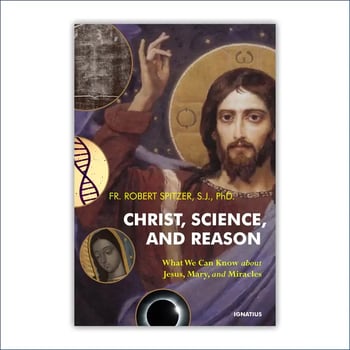
- Christ, Science, and Reason: What We Can Know About Jesus, Mary, and Miracles invites readers into a careful dialogue between belief and understanding. It offers space for honest questions, intellectual rigor, and faithful reflection, helping align the search for knowledge with the pursuit of truth.
- MagisAI App supports daily conversion work through personalized reflection and discernment tools. Encouraging thoughtful engagement with moral and spiritual questions, it helps sustain the ongoing turning of the mind toward what is good and true.
Both resources serve the same end. They foster intellectual honesty, cultivate clarity, and support the conscious decisions that shape a life of authentic conversion.
Conclusion: Conversion as a Lifelong Process
Conversion begins in the mind, but it does not remain there. It moves outward into action, habit, and love. It is a deliberate and reflective turning toward truth that unfolds across a lifetime. Lent invites us to return to this work with renewed seriousness, guided by the example of Christ and the wisdom preserved in scripture, history, and literature.
To live a converted life is to remain attentive, willing to be taught, and open to being changed. Through reflection, reason, and the steady pursuit of truth, conversion becomes not a single moment in the past, but a living commitment that shapes who we are and who we are becoming.