
Ash Wednesday opens Lent not with urgency or demand, but with an invitation: to remember. Before fasting is undertaken, before repentance is named, before hidden acts of devotion take shape, the Church traces ashes upon our foreheads and speaks a single, steady truth: remember. Remember who you are. Remember where you come from. Remember to whom you belong.
This moment is deliberate. Lent does not begin with striving, but with stillness. It does not start with effort, but with memory. Before we change our ways, we are asked to return, to recall the truth that has always held us, even when we have wandered from it.
Breaking Open the Word Remember
The word remember carries a weight far richer than its everyday use suggests. It comes to us from the Latin re-memorari, a word shaped not by the mechanics of recall, but by the movement of the soul.
- re — again, back, anew
- memor — mindful, conscious, attentive
At its root, remember means to become mindful again. It implies a return, not merely to a thought, but to a state of awareness. Etymologically, the word suggests motion: something that has slipped from view is drawn back into presence; something dispersed is gathered; something neglected is lovingly reclaimed.
To remember, then, is not to retrieve a fact from mental storage, as one might pull a file from an archive. It is to re-member—to reassemble what has been fragmented, to reunite what has been separated. The word itself hints at embodiment: member as limb, as part of a living whole. Remembering restores coherence. It brings the scattered self back into integrity.
In this sense, memory is not passive. It is generative. What we remember begins to shape us again. What we hold in mind takes root in the heart. At its root, remembering is an act of restoration and re-centering: a return of truth from the margins of consciousness to its rightful place at the core of our being.
Scripture preserves this deeper meaning. In the biblical imagination, remembering always moves toward action. When God “remembers,” creation shifts, covenants unfold, mercy breaks in. When humanity remembers God, lives are reordered. Memory becomes fidelity in motion.
Forgetting, by contrast, is never neutral. It distorts vision: of God, of self, of reality. To forget is to lose proportion, to misplace meaning, to live as though the center were elsewhere. Remembering restores alignment. It allows truth to breathe again.
To remember, in its fullest sense, is to return to what gives life and to let it shape us anew.
Scripture as God’s Remembrance of Humanity
Throughout the Bible, God’s “remembering” is never a lapse corrected or a detail recovered. God does not forget. When Scripture says God remembers, it is revealing something far deeper: covenantal faithfulness made visible in time. God’s memory is not passive awareness; it is love moving toward action.
God remembered Noah and all the wild and farm animals that were with him in the ark. God made a wind blow upon the earth, and the waters began to recede.
—Genesis 8:1
This remembering comes at the moment when the world seems most undone. The waters have covered everything. Waiting has stretched long and silent. When God remembers Noah, the flood does not vanish instantly: the waters begin to recede. Wind moves. Ground reappears. Life becomes possible again.
God’s remembering marks the turning point from chaos to renewal. Memory becomes mercy in motion.
God heard their cry and remembered his covenant with Abraham, with Isaac, and with Jacob.
—Exodus 2:24
Here, remembrance is tied not to a person alone, but to a promise. The cries of the enslaved rise up, and God remembers; not because the covenant had been misplaced, but because the time for deliverance has come. This remembering leads directly to liberation.
God’s memory carries history forward. What was spoken generations earlier now takes shape in freedom.
When Scripture says God remembers, it means God acts in fidelity. Divine remembrance always bends toward restoration, rescue, and renewal. The biblical story bears steady witness to this truth: humanity has never slipped from God’s attention, even when humanity forgets God entirely.
Ash Wednesday rests securely on this foundation. We do not begin Lent attempting to make ourselves visible to God through effort or display. We begin because we are already seen. We begin because God has already remembered us, and in that remembering, made a way back.
Ashes as an Act of Remembering
When ashes are placed upon the forehead, the Church does not speak in judgment, but in truth. A simple sentence is offered, quiet and ancient:
“Remember that you are dust, and to dust you shall return.”
These words do not diminish us. They locate us. Ashes become memory made visible, a truth traced upon the body itself. They recall our beginning, not as self-made beings, but as creatures shaped by a loving hand. We are reminded that our lives are received before they are achieved.
In remembering our mortality, we rediscover our dependence. In remembering our fragility, we uncover grace. What is temporary is not without meaning. What is fragile is not without care.
Ashes gently dissolve illusion and return us to what is real. In that honesty, there is freedom.
Biblical Memory vs. Modern Forgetfulness
In Scripture, memory is something shared and sacred. It is carried in feasts and stories, whispered in prayer, written into law. Israel is taught to remember not as a burden, but as a gift, because remembrance keeps the heart oriented toward truth. To remember God is to remain rooted in who we are.
Our own age moves differently. We remember endlessly, yet often forget what matters most. We hold onto numbers, schedules, and achievements, while meaning slips quietly away. Identity becomes something displayed and performed rather than received and lived. In the noise, the deeper story grows faint.
Into this drift, the prophet Joel speaks with tenderness rather than threat. He calls not for spectacle, but for return.
“Yet even now, says the Lord, return to me with all your heart, with fasting, with weeping, and with mourning.”
—Joel 2:12
These are not gestures of despair, but pathways home. Biblical repentance is not self-rejection. It is re-orientation, a gentle turning back toward what is real. To remember God rightly is to allow life itself to fall back into place, steady and true.
Identity Grounded in Origin, Not Achievement
Psalm 51 articulates the quiet work of remembering. David does not stand before God with a list of accomplishments or titles. He comes instead with honesty, remembering who he is in the presence of mercy.
“Create in me a clean heart, O God, and renew a resolute spirit within me.”
—Psalm 51:12
This prayer reaches deeper than correction. It asks for renewal at the place where identity is formed. In the biblical imagination, we are not defined by what we accomplish, display, or earn. Identity is rooted in origin, in being created and continually redeemed by God. We belong before we achieve.
This is why Jesus, in Matthew’s Gospel, turns our attention away from public displays of holiness. Fasting, prayer, and almsgiving are not meant for the gaze of others. They are quiet acts of remembrance, practiced in secret, where identity is restored, and relationship deepens. In the hidden places, we remember who we are and whose we are.
Remember in Classic Literature
In classic literature, remembering is never a quiet glance backward. It is a moral turning, a steady act of fidelity. Memory becomes the hidden place where desire and devotion meet, where the soul chooses who it will be.
Odysseus is tested not only by storms and monsters, but by gentler invitations to forget. Comfort offers him rest. Pleasure promises ease. Distraction softens the ache for home. To forget would cost him little in the moment. To remember costs him longing, endurance, and resolve. Yet he clings to memory as to an anchor. He remembers not only a place, but a promise. Who he is. Where he belongs. The life that calls him forward.
 Odysseus and Calypso by Jan Brueghel the Elder / Public domain via Wikimedia Commons
Scripture reveals that this same drama unfolds within the heart of history itself. When God remembers Noah, the waters begin to withdraw, and dry ground slowly appears. When God remembers His covenant in Egypt, chains loosen, and a path toward freedom opens. Divine remembering is never sentiment. It is faithfulness made visible. It is mercy moving through time.
Odysseus must struggle to remember. God does not. Even when humanity drifts, God remains steadfast. His remembering carries creation from chaos to renewal, from bondage to deliverance.
To remember, then, is to stand within that same current of fidelity. It is to let truth outlast temptation. It is to remain aligned with the promise spoken over our lives. And as Lent begins, we do not strive to be noticed by God. We begin by resting in this assurance: we have already been remembered, and in that remembrance, a way home has been made.
Remember in History
History, too, moves by the quiet strength of remembrance. Communities remember not to reopen wounds, but to guard what is true. Through memorials and anniversaries, through spoken names and shared silence, meaning is sheltered from the erosion of time. What is preserved is not only an event, but its weight, its cost, its enduring significance.
Each year, when a community gathers to honor those who gave their lives for others, something sacred unfolds. Names rise into the air. Stories are entrusted to the next generation. Silence settles like a reverent veil. In that remembering, courage is not lost to history, and sacrifice is not reduced to a date. Memory becomes a living teacher, shaping conscience and calling hearts toward gratitude and responsibility.
The Christian remembrance of the saints carries this same light. Their lives are recalled not to magnify achievement, but to steady hope. They remind us that faithfulness often unfolds far from applause, that holiness grows in hidden soil. In remembering them, we are reminded that quiet love, offered day after day, participates in eternity.
 The Forerunner of Christ with Saints and Matyrs by Fra Angelico / Public Domain via Wikimedia Commons
Right remembrance forms the soul. It teaches us what is worth choosing, what is worth enduring, and who we are meant to become. Forgetfulness blurs these lines and loosens our sense of direction. But to remember well is to remain oriented toward truth, anchored in what endures, and made whole by what we refuse to let fade.
Remembering Through Today’s Readings
St. Paul speaks to the Corinthians with the voice of one entrusted with a sacred message. He reminds them that they are not spectators to grace, but participants in it.
“Therefore, we are ambassadors for Christ, since God is appealing to you through us. We implore you through Christ to be reconciled to God. He made him who did not know sin to be sin for our sake, so that through him we might become the righteousness of God. As his coworkers, we urge you not to receive the grace of God in vain. For he says, ‘In an acceptable time I have listened to you, and on the day of salvation I have helped you.’ Behold, now is the acceptable time; behold, now is the day of salvation.”
—2 Corinthians 5:20-6:2
This remembering is not meant to stir anxiety, but attentiveness. Grace is already at work. The invitation has already been extended. To remember is simply to stop long enough to receive what is being given.
Lent becomes the season that makes this remembering possible. The Church gently slows our pace so that truth can surface again. Joel calls us to return with our whole hearts. The psalmist pleads for renewal from within. Jesus draws our gaze away from outward display and back toward the hidden life of the soul.
To remember God is to allow God to reorder our loves. When love is rightly ordered, life itself begins to make sense again.
Remembering with Depth and Understanding
Remembering well requires formation. Scripture invites both faith and understanding.
Science, Reason and Faith: Discovering the Bible helps readers encounter Scripture not as myth or moral suggestion, but as historical revelation—integrating scientific insight, philosophical reasoning, and theological truth. It equips readers to remember Scripture as it was meant to be received: intelligently and faithfully.
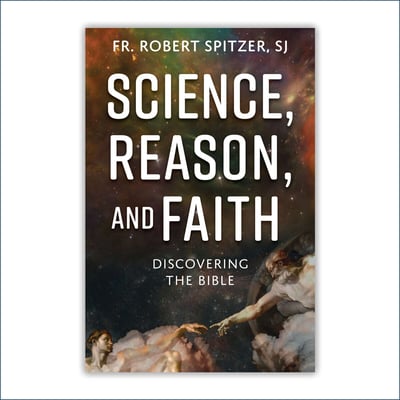
Likewise, The Science, Reason and Faith Catholic Study Bible offers rich commentary that situates Scripture within its historical, cultural, and doctrinal context, helping readers remember the Bible not as isolated verses, but as a unified story of salvation.

A Lenten Invitation for True Remembering
Ash Wednesday does not ask us to construct a better version of ourselves or to strive toward some imagined ideal. It asks something simpler and far more demanding. It asks us to remember the true one.
To remember is to return. It is to turn back toward God, toward truth, and toward the self we were created to be before fear, distraction, and striving took hold. Remembering draws us home to what has always been waiting beneath the noise.
As Lent begins, may our remembering be honest enough to name what has been forgotten, humble enough to receive mercy, and quiet enough to allow grace to do its slow and transforming work.