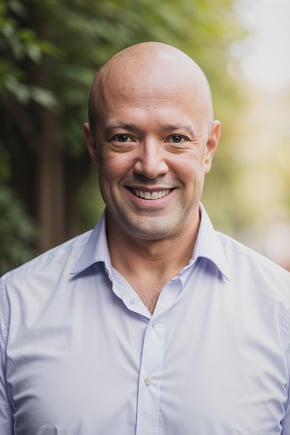
For more than two decades, I’ve lived at the intersection of science and clinical care as an NIH‑funded researcher, a clinician, and an educator. Over time, these varied roles have merged into a single, integrated calling to steward scientific knowledge. My writings and teaching of scientific information directly affect patients and their care partners, and shape how other clinicians understand and integrate evidence into patient care.
My perspective differs from most scientists. Their research usually unfolds in isolated environments where animals are poked, prodded, and sacrificed, frequently with little connection to the human condition. Nowadays, early‑career scientists are formed to treat science as a purely technical enterprise. “Success” is measured in protocols, patents, and grant funding. What was formerly the “brass ring” of scientific work—the human beings shaped by its output—is increasingly optional.
In contrast, the Catholic Church has always viewed scientific knowledge as more than “isolated data.” In this view, scientific knowledge is entrusted to the clinical and scientific communities for the sake of human dignity. Indeed, in a 1982 address to the Pontifical Academy of Sciences, St. John Paul II described science and wisdom as “a most precious heritage of humanity” that stands “at the service of man.” Addressing scientists again during the Jubilee of 2000, he urged them to “work in a way that serves the good of individuals and of all humanity, while always being attentive to the dignity of every human being.”
When science is severed from responsibility to the human person, trust erodes, scientific institutions lose legitimacy, and the system forgets the very people it claims to heal and protect. These consequences show up in the clinic, in public health, and in research ethics. As I’ve learned, they also surface in the quiet anxieties of patient communities, who wonder whether scientists exchanging theories in curated coffee bars still remember them.
The Pro‑Life Horizon: Every Human Body Bears Inherent Dignity
Catholic anthropology begins with a radical claim: every human life is sacred, and the human body is not incidental to that dignity. This is not a political statement; it’s a metaphysical one that is rooted in Scripture and affirmed by centuries of Christian reflection. Whether someone is Catholic or not, a truly “pro‑life” vision of the human person insists that:
- the human body is never a disposable instrument
- scientific inquiry must be ordered toward human flourishing
- research involving human tissue, development, or biological risk carries moral weight, not merely technical complexity
Anatomy Is a Moral Witness
If we want to understand why scientific authority is always moral authority, we need only look at the human body itself.
Take the human hand (a major part of my clinical “turf” as an occupational therapist). It contains 27 bones arranged with astonishing precision, capable of surgical delicacy and fierce protection. Its structure reveals purpose, not randomness. The hand is built for communion, work, care, and creativity. Any scientific decision that affects human hands affects human lives.
Or consider the developing embryo. Within 22 days of conception, the heart begins to beat. By 8 weeks, fingers form, joints flex, and the blueprint for the body is fully established. Anatomy reveals what theology proclaims: an embryo is not an amorphous “bundle of cells,” but a life unfolding. These are not political claims; they are anatomical facts.
Catholic anthropology insists that every human body matters. By extension, every scientific decision affecting humanity should matter. Scientific authority is credible only when it acknowledges:
- the vulnerability of the human body
- the sacredness of human life at every stage
- the moral weight of decisions affecting human life
- the duty to protect the most vulnerable
This is not an argument against all science; it’s an argument supporting science worthy of the human beings it studies, treats, and affects.
The Future Begins With Us
From its earliest centuries, the Catholic Church has stood at the forefront of scientific inquiry and moral reflection. Monastic communities preserved and advanced natural philosophy; Gregor Mendel, an Augustinian friar, founded the science of genetics in his monastery garden in Brno; Georges Lemaître, a Belgian priest, first proposed the expanding-universe model that became the Big Bang; and countless other clergy and religious, among them astronomers, physicians, and mathematicians, helped shape the foundations of modern science. The Church’s rich scientific history reflects a conviction that scientific knowledge must serve the human person.
Catholics are well positioned to take up this stewardship, not because we hold a monopoly on valuing human life, but because our tradition has thought carefully, and for a very long time, about why that life is valuable. Catholic anthropology, and especially its account of the sanctity of life, offers an unusually coherent foundation for grounding scientific practice practice in the dignity of the human person.
When Catholics speak and act with the dignity that our faith proclaims, we create cultural conditions in which scientific and medical authorities must operate with humility, transparency, and moral seriousness.
If we want a scientific culture worthy of the human beings it studies, treats, and affects, then we must become a people who consistently insist that every human life is inviolable. And this is where you, the reader, come in.
Molding our culture happens in ordinary places: in your parish when you choose ministries that honor the dignity of the body; in your grocery store when you support companies committed to ethical sourcing; in your bookstore when you seek out authors who treat human life with seriousness; in the websites you use when you favor platforms that handle information responsibly; in your doctor’s office when you ask how treatments respect the whole person; and in your community when you advocate for policies that protect the vulnerable. These are just some of the places where Catholic anthropology—and especially its views on the sanctity of life—can rebuild trust by cohabitating scientific practice with the dignity of the human person.
In the end, this is simply a call to live what we already believe. When our Catholic convictions shape our choices in our homes, parishes, and communities, we build a culture where scientific work is carried out with concern for the people it affects. A culture worthy of the human person begins with the quiet, steady commitments of ordinary people who remember what every human body is worth. That’s us.