Today’s Catholic educators are facing a challenge unlike any previous generation.
Many students are not rejecting faith because they are rebellious or uninterested in meaning. Increasingly, they are walking away because they believe faith and reason are incompatible. By the time many students reach high school—and certainly college—they begin encountering questions surrounding science, truth, suffering, morality, technology, and identity that they often feel unequipped to answer.
Research continues to confirm what many teachers and parents already sense intuitively: belief formation is deeply affected during adolescence. Studies from organizations such as the Pew Research Center and CARA (Center for Applied Research in the Apostolate) indicate that many young people begin to disengage from faith around age 13. Additionally, many who later disaffiliate cite intellectual skepticism and a perceived conflict between science and religion as contributing factors.
This reality presents Catholic schools and educators with both a challenge and an opportunity.
Students Are Asking Bigger Questions
Today’s students are growing up in a digital culture shaped by constant information, rapid technological advancement, social media influence, and competing worldviews. They are asking important questions:
- Can science and faith coexist?
- Is belief in God rational?
- Does religion contradict modern discoveries?
- Why does suffering exist?
- Is truth objective?
- How do I defend my faith intelligently?
For many students, silence or oversimplified answers can unintentionally communicate that faith is fragile or unable to withstand scrutiny.
Catholic education has always held the opposite position.
The Catholic intellectual tradition has consistently affirmed that faith and reason are complementary, not contradictory. From St. Thomas Aquinas to modern scientific contributors of the Church, Catholicism has long embraced both theological truth and scientific inquiry.
The challenge today is helping students encounter that tradition in ways that are accessible, engaging, and developmentally meaningful.
The Importance of Formation, Not Just Information
One of the most important lessons educators continue to discover is that faith formation cannot simply rely on memorization or passive instruction alone. Students must be invited into deeper engagement.
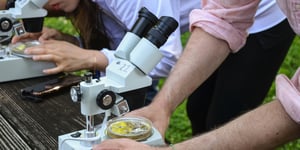
This is where integrated faith-and-science curricula can become transformative.
Programs such as The Catholic Faith & Science Curriculum and Speak the Faith were developed specifically to help students:
- explore questions of faith intellectually
- understand the compatibility of faith and science
- strengthen confidence in belief
- engage contemporary cultural questions
- develop critical thinking skills
- articulate and defend their faith with clarity and charity
Importantly, these programs are not intended to replace diocesan standards or core religious instruction. Rather, they are designed as supplemental tools that help educators present complex topics in ways that resonate with modern learners.
Measurable Impact Matters
Educators today are understandably looking not only for strong content but also for evidence of effectiveness.
Independent assessment through ARK testing has shown encouraging results tied to implementation of the curriculum, including measurable increases in student belief scores and engagement related to faith and reason topics.
While no curriculum alone can guarantee long-term discipleship, strong formation during middle school and high school years can provide students with an intellectual and spiritual foundation that helps their faith endure beyond graduation.
Teachers frequently report that students become:
- more willing to ask questions
- more engaged in classroom discussion
- more confident discussing faith
- more interested in apologetics and evangelization
- more open to a deeper exploration of Catholic teaching
Many educators also express appreciation for having structured, credible resources that address difficult contemporary issues directly and thoughtfully.
Supporting Teachers in a Challenging Cultural Moment
Catholic educators today carry an extraordinary responsibility. They are not only instructors; they are mentors, witnesses, evangelists, and leaders helping students navigate an increasingly complex world.
At the same time, teachers themselves are often balancing enormous demands:
- curriculum standards
- classroom management
- parent expectations
- digital distractions
- rapidly changing cultural conversations
Effective curriculum support should simplify implementation, provide a clear structure, and equip teachers with confidence rather than adding unnecessary burden.
The goal is not merely academic success, but authentic human and spiritual formation.
Looking Ahead
The future of Catholic education will depend in large part on our willingness to engage students honestly, intelligently, and compassionately. Young people are not afraid of difficult questions—and Catholic education should not be afraid of them either.
When students encounter a faith that welcomes reason, engages science, and speaks meaningfully into modern life, they are far more likely to recognize that belief is not opposed to truth, but deeply connected to it.
That work begins in classrooms, schools, and dioceses led by courageous educators willing to form both the minds and hearts of the next generation.