This year's iteration of the Venice Biennale—the most illustrious fine art exposition in the world—distinguished itself through an unexpected vector in modern creative expression: a genuine embrace of sacred dimensions. From the Hungarian pavilion exploring cosmic breath to the meditative Egyptian pavilion to the Serbian pavilion and its themes of Golgotha and rebirth, numerous national presentations gestured toward a transcendent reality. Meanwhile, the Holy See presented the mystical legacy of St. Hildegard von Bingen. Experiencing these exhibits firsthand revealed an undeniable conclusion: contemporary artistic culture has reopened its doors to spiritual awareness.
What Is the Venice Biennale?
Since 1895, the city of Venice, Italy, has hosted what is likely the most prestigious Fine Art event in the world. Titled La Biennale di Venezia, or the Venice Biennale, this months-long exposition hosts the work of contemporary artists from all over the globe. In fact, the Venice Biennale is perhaps best described as the "Olympics" of the art world. Participating nations select their most outstanding artists and feature their work in designated national pavilions. An expert panel then distributes awards, including the famous Golden Lion for the best national entry. Like the Olympics, which alternate between summer and winter games, the Biennale alternates between disciplines. In odd-numbered years it hosts the International Architecture Exhibition, and in even-numbered years the International Art Exhibition, which features media like painting, sculpture, installation and video.
This year's Biennale, focused on artistic media, is likely to experience a record number of visitors—perhaps reaching one million over the course of its run. And its content, this year, is notable for its soulful depth. While previous iterations of the Biennale have been antagonistic toward religion, ritual and the supernatural, the 2026 Biennale unashamedly embraces the spiritual dimension of human existence. The marked spiritual content of this year's Biennale (which the present author was fortunate to experience) is evidence of humanity's irrepressible awareness of the transcendent.
Spiritual Longing in the National Pavilions of the 2026 Venice Biennale
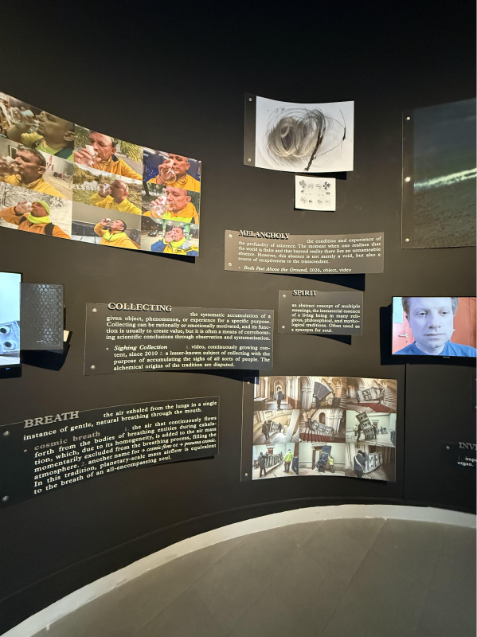
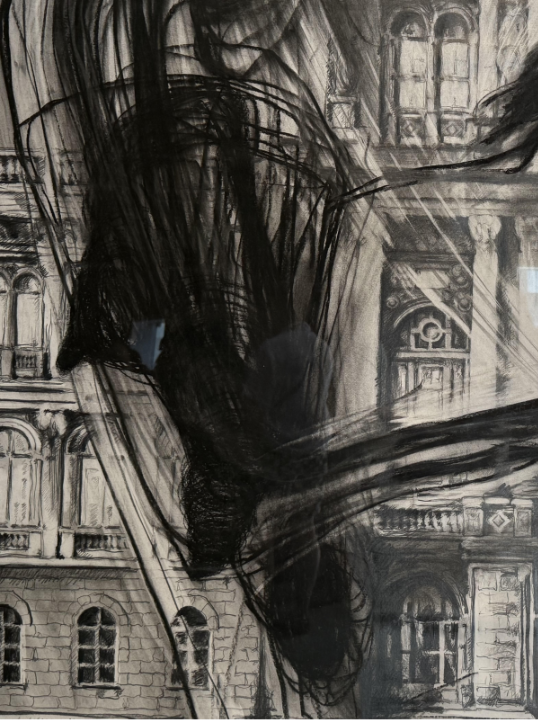
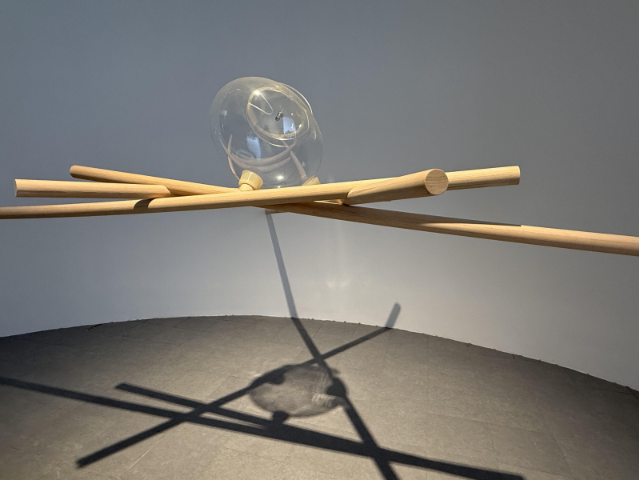
Indeed, "spiritual longing" was arguably a major theme among the national pavilions at this year's Biennale. The Hungarian pavilion hosted an exhibition called Pneuma Cosmic, which posited a universal spirit that, like the air, "permeate[s] and connect[s] everything in existence." In the opening chamber of the pavilion, wall texts connected "melancholy," "spirit" and "breath," suggesting how they are all, in some ways, the same. Nearby, a giant drawing depicted an ephemeral substance hovering over a Venetian palazzo. In one room toward the end, isolated and mysterious, a glass orb (seemingly empty) purported to contain the world's most ponderous sigh.
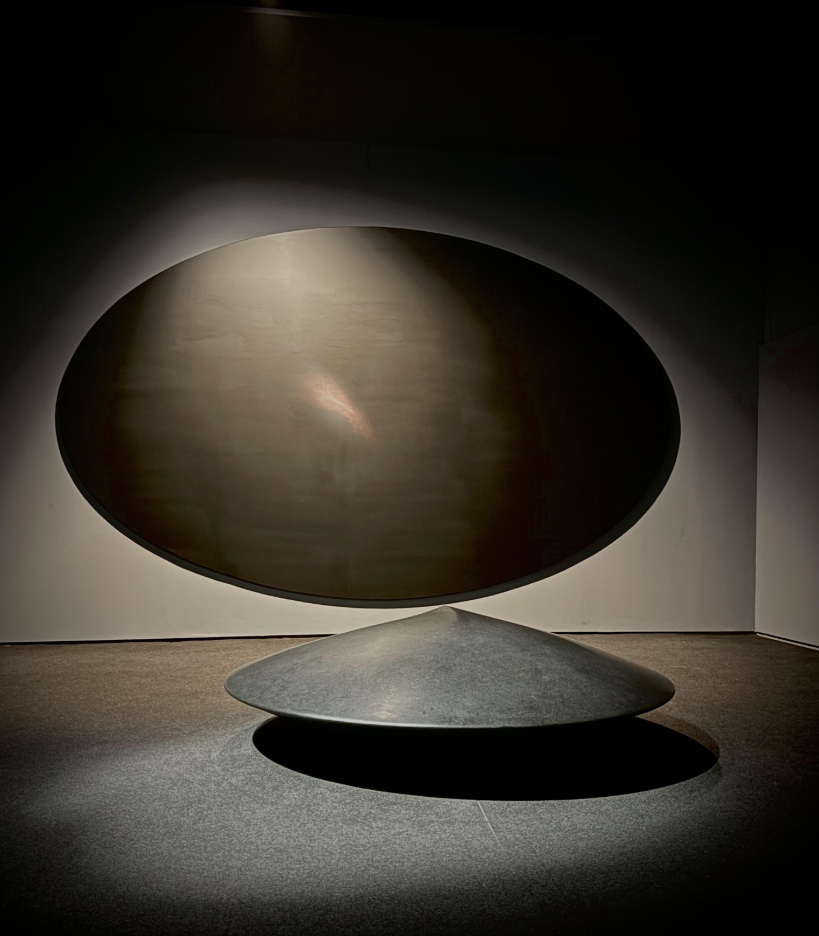
In the Egyptian pavilion, meanwhile, monumental abstract sculptures invoked something ancient and profound. Made of dark stone similar to the material used in ancient pharaohs' funerary statues, these sculptures were swathed in dim light and accompanied by cushioned benches. Visitors were asked to sit and contemplate, leaving behind the hectic atmosphere of the art fair outside. As the opening wall text to the Egyptian pavilion read, "listen to the silence/ observe the invisible/ touch the intangible." Here, abstract art was intended to create a religious experience.
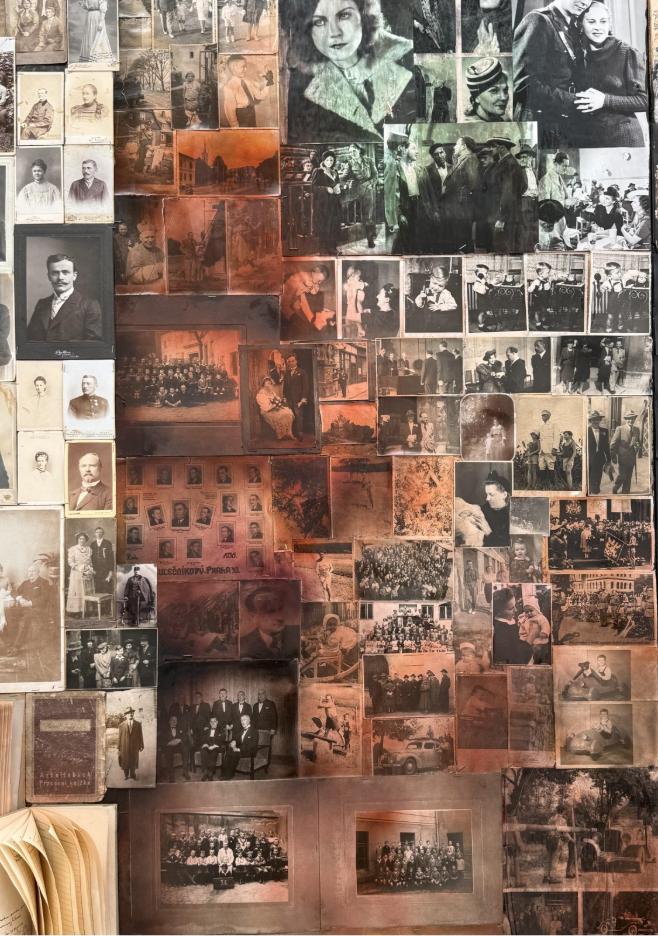
The Serbian pavilion, finally, embraced obvious Christian references in its exhibition, From Golgotha to Resurrection. Here, archival materials, including old photographs, were collaged together to evoke and honor the lives of millions of early twentieth-century war victims and refugees. As the exhibition's organizers stated, bare "rationalism" has reached the end of its usefulness as a governing principle, and other horizons must be explored. These horizons, the exhibition implies, must include something beyond the merely rational: something supernatural or transcendent. As the opening text for this exhibition asked, "[Can] a new language of values emerge once the old frameworks have lost their credibility"?
The Vatican Pavilion at the 2026 Venice Biennale: St. Hildegard von Bingen
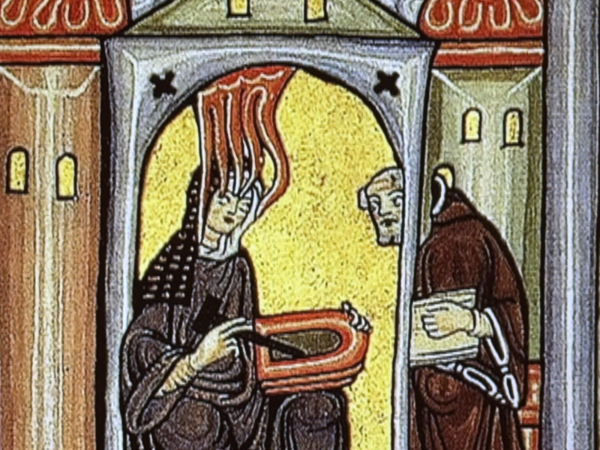
For many years, Vatican City has contributed work to the Venice Biennale, and this year was no different. As if in answer to the questions raised by the national representatives of Hungary, Egypt and Serbia (as well as other countries), the Vatican offered the work of St. Hildegard von Bingen. A celebrated mystic who fruitfully connected her spiritual insights to the governance of a monastery, the cultivation of land, and the creation of medicines, Hildegard modeled a "language of values" that might feel new in the twenty-first century but is actually very old.
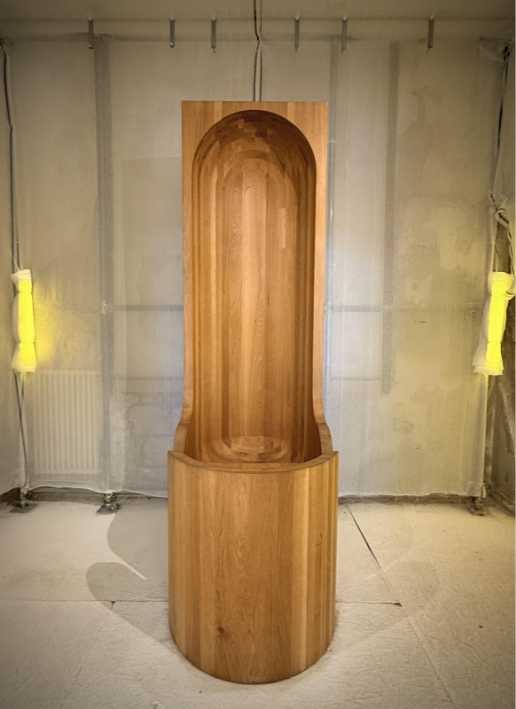
And in the Vatican pavilion, the perennial value of Christian spirituality was echoed not only in the artwork displayed, but in the structure of "pavilion" itself! For the Vatican "pavilion" wasn't a custom-built structure, but a centuries-old church undergoing restoration. Here, mystical imagery from Hildegard's writings was artfully juxtaposed with restorers' scaffolding, architectural plans for a new Benedictine monastery (Hildegard's order), and the ethereal sounds of the saint's musical compositions—all bathed in golden light. The message: when spirit and matter work together, acknowledging every aspect of human existence, a celestial harmony is born.
Freqeuntly Asked Questions
Discover how spirituality is reflected in art.
What is the Venice Biennale?
The Venice Biennale (La Biennale di Venezia) is an international contemporary art exhibition held in Venice, Italy, since 1895. It's often called the "Olympics of the art world." Nations show their leading artists in national pavilions and compete for awards such as the Golden Lion.
What was the spiritual theme of the 2026 Venice Biennale?
Many national pavilions explored transcendence and the sacred. Hungary's Pneuma Cosmic treated spirit as breath, Egypt built a space for silent contemplation, and Serbia presented From Golgotha to Resurrection.
What did the Vatican pavilion feature at the 2026 Venice Biennale?
The Holy See honored St. Hildegard von Bingen. Her mystical imagery and music were installed inside a centuries-old church under restoration, alongside plans for a new Benedictine monastery.
Who was St. Hildegard von Bingen?
Hildegard was a 12th-century Benedictine abbess, mystic, composer and Doctor of the Church. She was known for linking spiritual insight with monastic leadership, agriculture and medicine.
Why does spirituality in contemporary art matter?
Its return at the art world's most prestigious exhibition suggests that, even in secular culture, people still long for meaning beyond the purely rational.